
Data Synthesis
A Comprehensive Approach to Data-Driven Decision Making
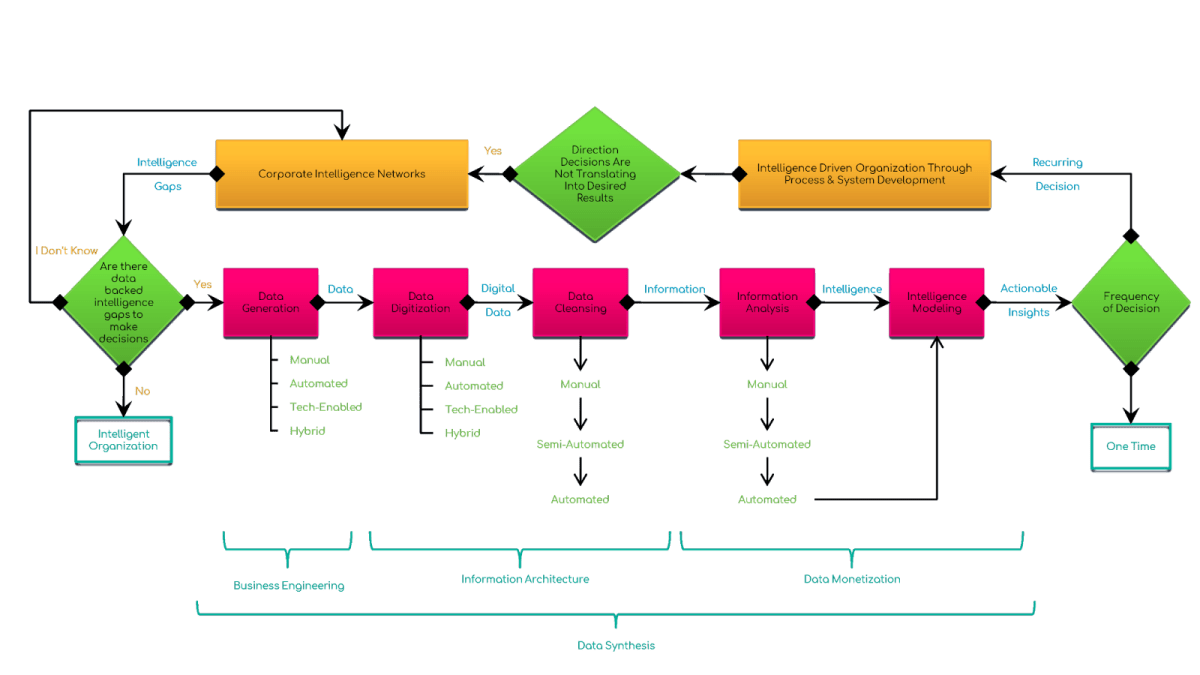
What is Data Synthesis?
Data synthesis refers to the process of generating, managing, analysing, and modelling data to gain actionable insights or build decision support tools. It is a systematic approach that supplements traditional decision-making by combining intuition with data-driven analysis.
The Importance of Data Synthesis
In every real-life scenario, decisions are made based on transactions and data. For example, in retail, each sale generates valuable data such as:
- Product sold
- Product price
- Quantity sold
- Payment method
- Customer details
Retailers often rely on intuitive decisions—such as determining pricing strategies or customer payment terms—based on this transactional data. Additionally, systematic analysis of financial statements, like balance sheets, can inform business decisions, such as whether to expand, focus on increasing profits, or improve cash flow management.Successful retailers combine both approaches: intuition and data analysis. Data synthesis bridges the gap between these methods, enhancing decision-making by providing insights from both structured and unstructured data.
Key Scenarios for Data Synthesis
- Digitization of Data – If your data exists in a non-digital form, the first step is to digitize it to make it accessible for analysis. This is essential for organizations looking to transition to data-driven decision-making.
- Generation of Data – Sometimes the data you need may not be available. In such cases, generating new data efficiently and cost-effectively is crucial. This process ensures that you can meet your objectives without unnecessary resource expenditure.
- Cleansing of Data – Data quality is essential. If you already have digitized data but it’s not ready for analysis, it must be cleansed and standardized. Data cleansing removes inconsistencies and errors, ensuring that the data is accurate and reliable for modelling and analysis.
- Analysis of Data – With robust, digitized data, you can uncover valuable insights that might otherwise be overlooked. Advanced data analysis techniques, such as predictive analysis and trend analysis, can guide decision-making and improve business strategies.
- Modelling Data for Decision Support – As new data streams in, modelling allows organizations to simulate various scenarios and predict outcomes. By using data models, businesses can make informed decisions about future actions, risk management, and resource allocation.
Why Data Synthesis Matters
Data synthesis enables businesses to make more informed decisions by combining intuitive knowledge with data-driven insights. It provides a structured framework to leverage both historical and real-time data, optimizing strategies, and improving outcomes across various industries.By integrating data synthesis into your business operations, you can:
- Improve decision-making processes
- Enhance business intelligence
- Reduce reliance on guesswork and intuition
- Increase operational efficiency
Conclusion
In today’s data-driven world, businesses need more than just intuition to make critical decisions. Data synthesis empowers organizations to combine data analysis with strategic decision-making, ensuring that every choice is backed by actionable insights. Whether you are digitizing, cleansing, analysing, or modelling your data, the goal is to make smarter decisions that lead to better business outcomes.